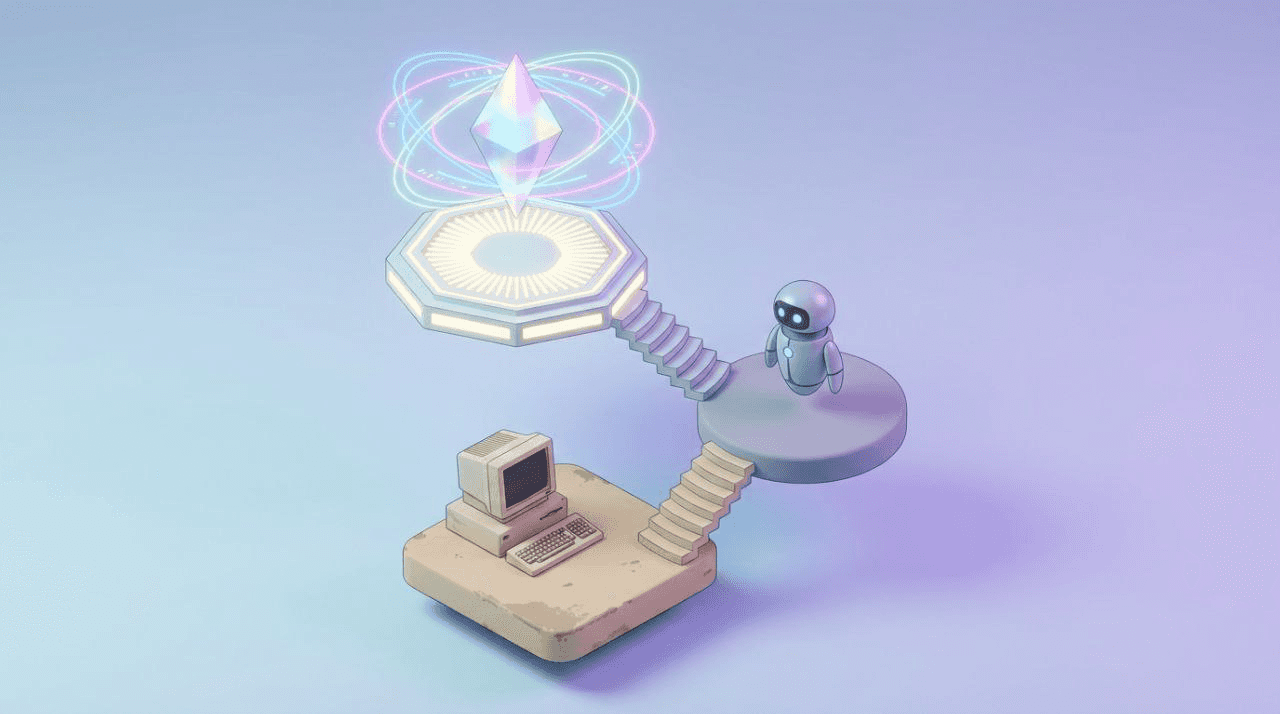
The pace of AI advancement has been staggering. Models that seemed revolutionary a year ago are already being surpassed by newer, faster, more capable systems. While current AI tools are impressive, the research pipeline suggests even more transformative capabilities are on the horizon. Understanding these emerging trends helps creators, businesses, and developers prepare for the next wave of AI-powered workflows.
This guide explores the key technological shifts expected to mature in 2026 and beyond. These are not speculative science fiction concepts—they are active research areas with working prototypes already demonstrating their potential. The question is not whether these capabilities will arrive, but how quickly they will become accessible to mainstream users.
1. Real-Time Generation: From Minutes to Instant
Current AI image and video generation requires patience. You type a prompt, wait for the model to process, and hope the result matches your vision. This delay disrupts creative flow and limits iterative experimentation. The next generation of AI models will eliminate this bottleneck entirely.
What real-time generation means:
- Instant feedback: Images and video generate as fast as you can type or draw
- Interactive creation: Adjust parameters and see changes reflected immediately
- Fluid workflow: Creative iteration happens at the speed of thought, not server processing
- Lower friction: Reduced waiting time encourages more experimentation and exploration
Technical enablers of real-time AI:
- Model distillation: Smaller, faster models that retain the capabilities of larger systems
- Hardware optimization: Specialized AI chips designed for generative workloads
- Efficient architectures: New neural network designs that require less computation
- Edge deployment: Running models locally on devices instead of cloud servers
- Progressive generation: Showing rough results immediately, refining in background
Impact on creative workflows:
- Design iteration: Try dozens of variations in the time it currently takes to generate one
- Collaborative creation: Multiple users can work on the same project simultaneously
- Live performance: Generate visuals in real-time for concerts, events, presentations
- Interactive storytelling: Create branching narratives where visuals adapt instantly
- Education and training: Immediate visual feedback for learning and skill development
Real-time generation transforms AI from a tool you wait for into an extension of your creative process. The distinction between thinking and creating begins to blur when visual output appears as quickly as mental imagery.
2. Long-Form Video: From Clips to Complete Narratives
Current AI video models excel at short clips—3 to 10 seconds of coherent motion. This limitation restricts their use to social media snippets, visual effects, and brief animations. The next frontier is long-form video generation: creating minutes or even hours of consistent, coherent video content with persistent characters, locations, and storylines.
Challenges of long-form video:
- Temporal consistency: Maintaining character appearance and scene continuity across time
- Narrative coherence: Following story logic and cause-effect relationships
- Memory management: Remembering details established earlier in the video
- Computational complexity: Processing thousands of frames with consistent quality
- Director control: Allowing human creators to guide the narrative effectively
Emerging solutions:
- Memory-augmented models: Systems that store and reference key details throughout generation
- Scene graph representations: Tracking objects, characters, and relationships explicitly
- Script-to-video pipelines: Converting written scripts into visual sequences systematically
- Modular generation: Creating scenes separately, then stitching them together coherently
- Human-in-the-loop editing: Allowing creators to refine and adjust at key points
Potential applications:
- Independent filmmaking: Create entire short films without large crews or budgets
- Education content: Generate custom educational videos explaining complex topics
- Marketing series: Produce episodic content featuring consistent brand characters
- Game development: Create cutscenes and narrative sequences programmatically
- Personal storytelling: Turn written stories or memories into visual narratives

Long-form video generation democratizes filmmaking in the same way that digital cameras democratized photography. The barrier to creating compelling visual narratives drops dramatically, enabling new forms of storytelling and content creation.
3. Physics Understanding: From Visual Plausibility to Physical Accuracy
Early AI image generators struggled with basic physical concepts. Hands had the wrong number of fingers, objects floated in midair, and liquids behaved unnaturally. While current models have improved significantly, they still lack genuine understanding of physics—they mimic visual patterns without comprehending the underlying principles.
The next generation of AI will incorporate explicit physics knowledge, enabling more accurate and predictable generation of physical phenomena.
Current limitations in physics understanding:
- Fluid dynamics: Water, smoke, and fire often look unnatural or inconsistent
- Material properties: Objects may not behave according to their apparent material
- Gravity and momentum: Motion may violate basic physical laws
- Cause and effect: Actions may not produce logically consistent results
- Spatial reasoning: Objects may intersect or occupy impossible positions
Approaches to physics-aware AI:
- Physics-informed training: Incorporating physical laws into model training objectives
- Hybrid systems: Combining neural networks with traditional physics engines
- Simulation-based learning: Training models on physically accurate simulations
- Explicit constraints: Enforcing physical rules during generation process
- Multi-modal understanding: Learning physics from video, not just static images
Benefits of physics-aware generation:
- Architectural visualization: Accurate lighting, shadows, and material behavior
- Product design: Realistic prototypes that behave like physical objects
- Scientific communication: Visualizing complex physical phenomena accurately
- Engineering simulation: Generating plausible mechanical interactions
- Entertainment effects: More convincing visual effects for film and games
Physics understanding bridges the gap between visual approximation and functional accuracy. When AI can generate not just what things look like, but how they actually behave, the applications extend far beyond creative content into engineering, science, and education.
4. Multimodal Integration: Unified Models for All Media Types
Today's AI ecosystem is fragmented. You use one tool for images, another for video, a third for audio, and a fourth for 3D models. Each has its own interface, prompt syntax, and capabilities. This fragmentation creates workflow friction and limits creative possibilities that span multiple media types.
The future belongs to unified multimodal models that can generate, understand, and translate between all forms of media seamlessly.
What unified multimodal models enable:
- Cross-modal generation: Create video with synchronized audio from a single prompt
- Media translation: Convert images to 3D models, video to text descriptions, music to visuals
- Consistent characters: Maintain character identity across images, video, and voice
- Integrated editing: Edit multiple media types within a single interface
- Contextual understanding: Models understand relationships between different media forms
Practical multimodal workflows:
- Text-to-complete-video: Describe a scene, get video with visuals, dialogue, sound effects, music
- Image-to-3D-to-animation: Upload photo, generate 3D model, animate with physics
- Audio-driven visuals: Music or voiceover automatically generates synchronized visuals
- Cross-platform adaptation: Convert content seamlessly between formats and aspect ratios
- Interactive experiences: Create content that responds to user input across modalities
Technical challenges being addressed:
- Representation learning: Finding common representations for different media types
- Alignment problems: Ensuring different modalities stay synchronized and coherent
- Computational demands: Processing multiple high-dimensional media streams simultaneously
- Training data: Curating datasets that include aligned examples across modalities
- Interface design: Creating intuitive tools for controlling complex multimodal generation
"Unified multimodal models will make today's fragmented AI tools look like separate calculator, camera, and music player apps before smartphones integrated everything into one device."
5. Enhanced Reasoning and Planning Capabilities
Current AI models are primarily pattern matchers. They excel at generating content that resembles their training data, but they struggle with tasks requiring multi-step reasoning, strategic planning, or abstract problem-solving. The next generation will incorporate more sophisticated reasoning capabilities, enabling AI to function as a true creative partner rather than just a content generator.
Limitations of current reasoning:
- Short context windows: Models forget information mentioned earlier in long prompts
- Surface-level understanding: Models recognize patterns without deep comprehension
- Brittle generalization: Small changes in prompt can lead to completely different outputs
- Lack of planning: Models generate sequentially without overall strategy
- Difficulty with constraints: Hard to enforce multiple simultaneous requirements
Emerging reasoning capabilities:
- Chain-of-thought prompting: Models show their reasoning steps explicitly
- Tree-of-thoughts search: Models explore multiple reasoning paths before deciding
- External memory: Models can reference and update persistent knowledge stores
- Tool use: Models can call external functions and APIs to extend capabilities
- Self-correction: Models can evaluate and refine their own outputs
Impact on creative collaboration:
- Project planning: AI helps break down complex creative projects into manageable steps
- Consistency checking: AI identifies and flags inconsistencies across large projects
- Style enforcement: AI ensures adherence to brand guidelines and style requirements
- Iterative refinement: AI suggests improvements and alternatives systematically
- Knowledge integration: AI incorporates domain-specific knowledge into generation
6. Personalization and Adaptation
Today's AI models are generic. They generate content based on patterns learned from massive datasets, but they do not adapt to individual users' preferences, styles, or needs. The next evolution brings personalized AI that learns from your specific usage patterns and tailors its outputs accordingly.
How personalized AI works:
- Usage tracking: System observes which outputs you prefer, edit, or discard
- Style learning: Model identifies patterns in your aesthetic preferences
- Feedback incorporation: Explicit ratings and corrections guide adaptation
- Progressive refinement: Model becomes more attuned to your needs over time
- Privacy-preserving: Personalization happens locally or with strict data controls
Benefits of personalized AI:
- Faster workflow: Less time spent refining outputs to match your style
- Better alignment: Outputs more closely match your creative vision from the start
- Style consistency: Maintains your unique aesthetic across all generated content
- Reduced friction: Fewer iterations needed to achieve desired results
- Creative partnership: AI becomes an extension of your creative voice
Preparing for the AI Future
These technological shifts will not happen overnight, but they are inevitable. Organizations and creators who prepare now will be best positioned to leverage these capabilities when they arrive.
How to prepare:
- Build AI literacy: Understand current capabilities and limitations
- Experiment early: Test emerging tools and workflows before competitors
- Develop prompt libraries: Create and refine prompts that work for your needs
- Establish workflows: Integrate AI into your creative processes systematically
- Stay informed: Follow research developments and industry trends
- Build skills: Develop complementary skills that AI cannot replace
The future of AI is not about replacing human creativity. It is about amplifying it. The most successful creators will be those who learn to collaborate effectively with increasingly capable AI systems, using technology to extend their vision rather than replace their voice.
At Wanoza, we are building these next-generation tools today. Stay ahead of the curve with early access to cutting-edge AI capabilities.